
Identify and interpret atmospheric phenomena
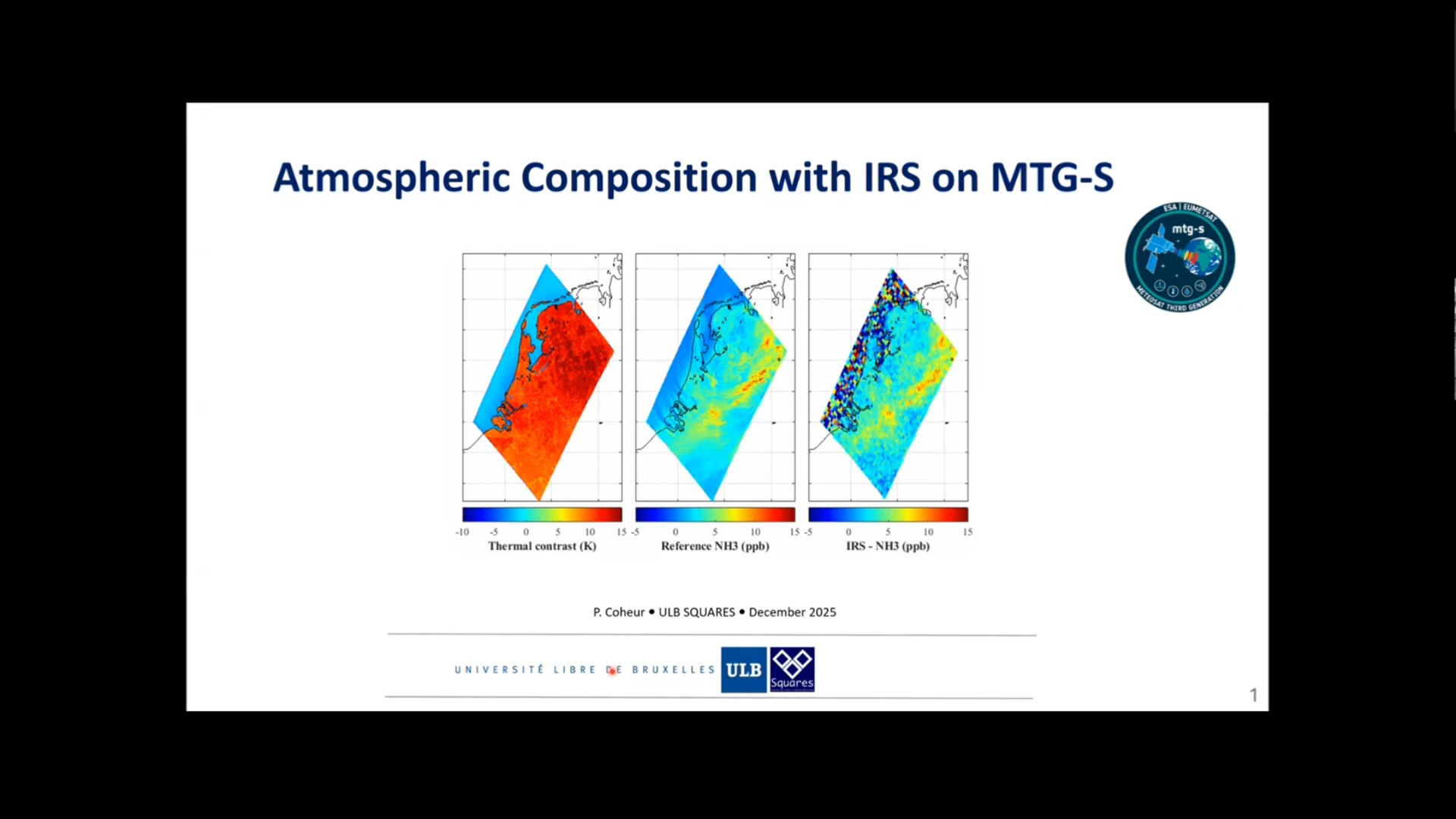
Pierre Coheur talks about the uses of IRS instrument for atmospheric composition.

Ibrahim Mohammed Al-Abdul Salam shows a number of examples of MTG FCI Imagery during various weather situations over the Middle East and North Africa (MENA) region.
This presentation highlights early applications of Meteosat Third Generation (MTG) data across the Middle East and North Africa (MENA) region. Using regional case studies, it demonstrates how MTG supports the monitoring of convection, dust storms, fog, tropical cyclones, fires, and other key atmospheric features. The talk explores operational benefits, practical challenges, and the regional relevance of MTG products—while also recognizing the continued value of Meteosat Second Generation (MSG) data and its important role alongside MTG.

Ivan Smiljanic talks about aerosol detection with the new FCI instrument. Higher number of spectral channels coupled with increased spatial resolution make detection of aerosol better than ever.
Drawing from enhanced spectral coverage of the MTG FCI instrument (comparing with MSG SEVIRI), enhanced capabilities of aerosol detection are expected. Major improvements are during daytime related to existence of new channels with shorter wavelengths (namely VIS0.44 and VIS0.55), and to existence of new NIR1.38 that is specifically designed for detection of higher level features (including aerosols). During night time (ie 24h), enhanced spatial and radiometric resolution of IR channels offer better sensitivity to aerosols with larger particles like dust, volcanic ash or even a pollen.

Andrea Meraner talks about the new channels on FCI instrument that bring new possibilities within the fire detection area.
The Flexible Combined Imager (FCI) instrument on-board the Meteosat Third Generation (MTG) satellite introduces unprecedented detection capabilities for wildfires from geostationary orbit. This presentation offers an overview of the instrument, focusing on characteristics relevant for identifying hotspots. We will then present case study analyses collected over the commissioning phase of the instrument, focusing on the Portugal September 2024 fires. We will explore visualisations utilising RGBs such as Fire Temperature and True Colour, leveraging the new FCI channels.

Alois Holzer talks about what MTG means for convection forecasting/nowcasting and goes over the topic of lightning imager in more detail.
MTG offers a number of both improved and new opportunities for nowcasting severe thunderstorms. For the pre-convective phase, the new 0.9 micron channel allows for the first time for a high-quality 2D visualization of total column moisture, more specifically under cloud-free daylight conditions. By looping such imagery, forecasters can follow the buildup or advection of atmospheric moisture in currently 10-minute and soon 2.5-minute steps, i.e. near real-time, which can be important information under certain weather conditions. For convection initiation, again under daylight conditions, the new Cloud Phase and Cloud Type RGBs offer a clear distinction between water droplets and ice crystals, i.e. give clear indication on the glaciation of growing cumulus clouds providing potential extra lead-time before the first lightning flash can be detected. The lightning imager (LI) will complement this information with a good ability to detect early intra-cloud lightning, typically before the first cloud to ground strike does occur for both day and night. During the mature phase of convective storms, the improved spatial (and soon also temporal) resolution of FCI compared to SEVIRI allows us much better than before to see storm-top features strongly indicative for severe convective storms – like distinct OTs and AACPs (for example in Sandwich imagery). The LI point data with its pseudo-high resolution that provides much finer data than one would expect from the nominal pixel grid (based on the principle of radiance-weighted centroids) has demonstrated to highlight especially severe hailstorms with distinctive ringlike features.

Roland Winkler shows examples of overshooting tops, gravity waves etc. using MTG FCI products.
Satellite images are now indispensable for analyzing storms and the atmospheric physical processes that emanate from them. New satellite generations, such as the third generation of European weather satellites, support this analysis with their higher spatial and temporal resolutions, as well as new spectral channels. This presentation highlights these new possibilities using examples using old and especially new spectral channels or channel combinations (RGBs and images in the blended technique).
Go to lecture slides

Andreas Wirth shows the benefits and drawbacks of new RGBs that are now possible with FCI and how to use them.
Besides better temporal and horizontal resolution, the FCI sensor on-board MTG-I also offers additional spectral bands mainly in the short infrared and visible range. These new channels were used to create RGB composite images such as the Cloud Type RGB, the Cloud Phase RGB, the Fire RGB and the True Color RGB. This presentation will highlight the benefits coming from these new RGB types. Application examples will be given and the impact of the new channels will be explained. The focus of this presentation will lay on the information provided by the new RGB types as well as on the limitations and challenges forecasters are confronted with when using them.

Roxane Desire gives a complete overview on the new Cloud Type RGB.
While it may seem simple to use at first glance, with its very distinctive and contrasting colors, the Cloud Type RGB product is nonetheless full of subtleties. A review of everything it is capable of and a comparison with other products.

Johan Strandgren talks about the EUMETSAT Level-2 Products.
This presentation outlines the MTG-I FCI Level-2 (L2) products generated at the EUMETSAT Central Facility and disseminated to users. These products support applications such as cloud analysis, atmospheric instability, fire detection, atmospheric motion vectors, and all-sky radiances, serving data assimilation, nowcasting, and research communities. We will present early validation results from the ongoing L2 commissioning and plans for future enhancements.

Carla Barroso gives a presentation on EUMETSAT data visualization resources and repositories.
Meteosat Third Generation (MTG) imagery can be easily explored using EUMETView, EUMETSAT’s user-friendly web-based visualisation tool. Users who wish to go beyond visual inspection can access EUMETSAT's flexible portfolio of data services. One of these is the Data Store, which enables users to easily locate and download both near-real-time and historical datasets. This presentation will begin with a brief overview of EUMETView, followed by an introduction to several Jupyter notebooks designed to bridge the gap between data discovery and practical application. The first notebook focuses on the process of accessing and downloading data from the EUMETSAT Data Store, while the subsequent notebooks delve into the exploitation and visualisation of data from the Flexible Combined Imager (FCI) and the Lightning Imager (LI) sensors on board MTG.
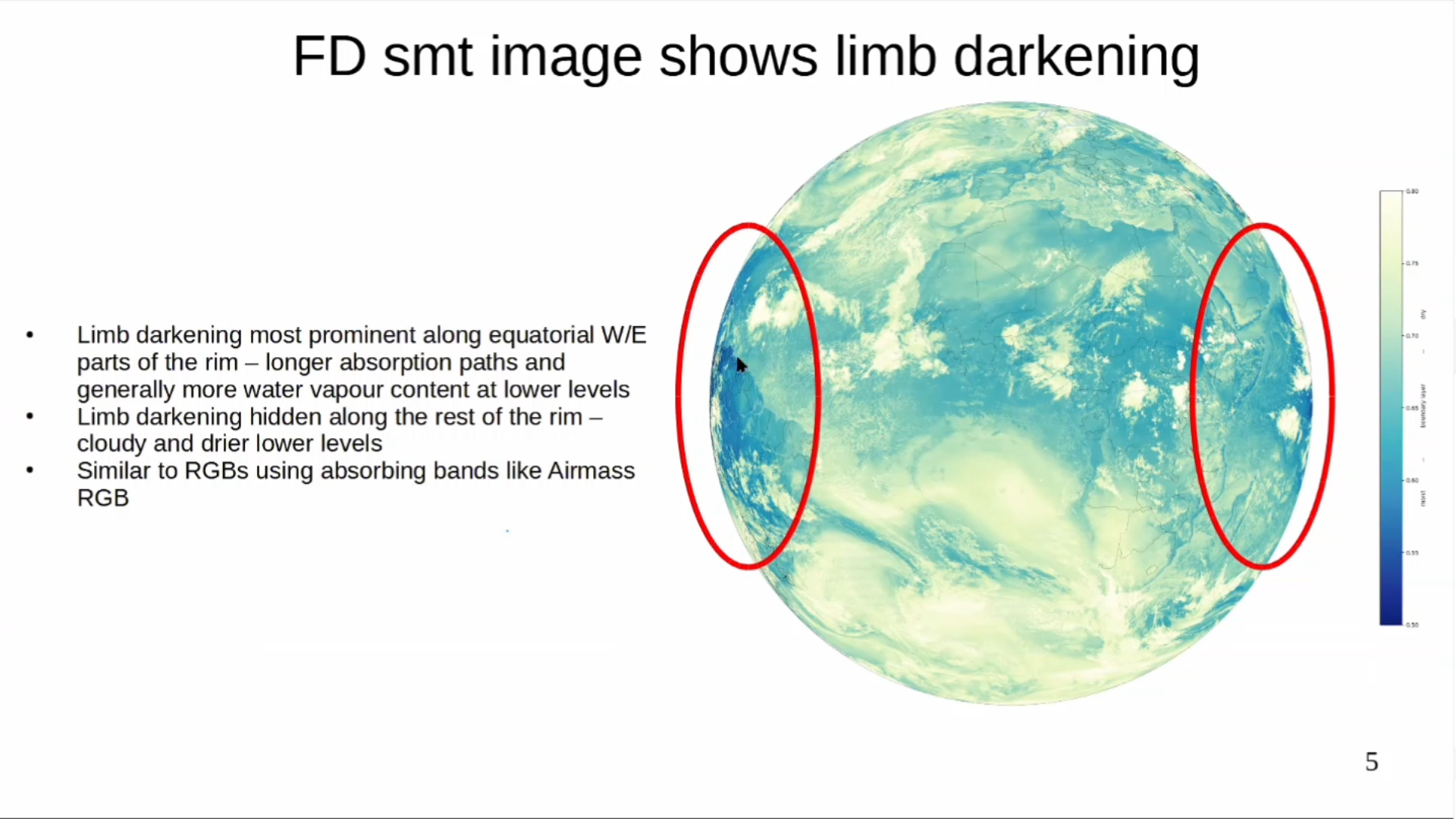
Hans Peter Roesli talks about a new product for low level moisture detection using the new 0.9 channel present on the FCI instrument.
Go to lecture slides
Sven-Erik Enno talks about the Lightning Imager instrument onboard MTG-I1 satellite.
The Meteosat Third Generation (MTG) Lightning Imager (LI) was declared operational on October 31, 2024. This brand-new European Instrument is devoted to the real-time monitoring and characterization of lightning activity over Europe, Africa, and a large portion of the Atlantic Ocean. This presentation will demonstrate LI observational capabilities from individual lightning flashes to hemisphere-scale statistics and present the outcome of the latest LI performance assessments.
Go to lecture slides